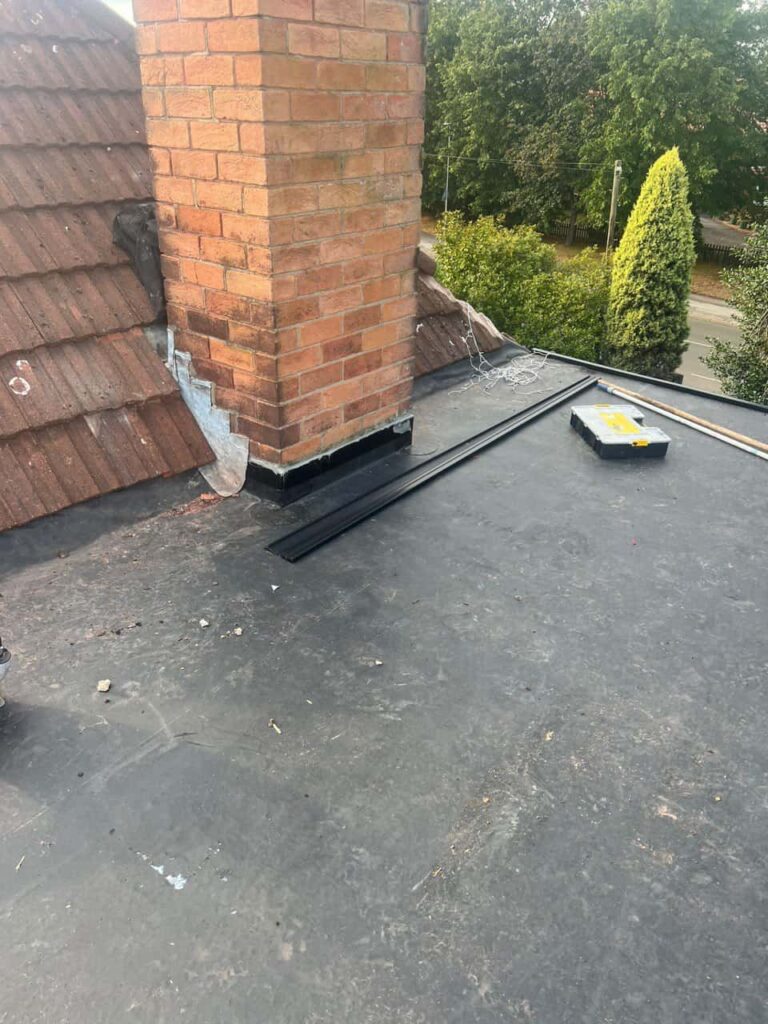
A roof may remain apparently dry during a short shower yet begin leaking after several hours of light rain. This can seem unusual, but the duration of rainfall is often as important as its intensity. A small roofing defect may admit moisture slowly, allowing water to accumulate before it becomes visible inside the property.
For homeowners in Cottingham, East Riding of Yorkshire, a leak that appears during prolonged rainfall should be professionally investigated. The pattern can provide useful evidence about how water is entering and travelling through the roof.
How Prolonged Rainfall Exposes Hidden Roof Defects
Roof coverings are designed to direct water away from the property. When tiles, flashing, underlay or other components deteriorate, they may still cope with brief rainfall but struggle once they remain wet for an extended period.
A small amount of moisture can initially be absorbed or redirected by the materials beneath the covering. As those materials become saturated, water may eventually reach the roof space, insulation and ceiling below.
Small Defects Allow Water to Enter Gradually
A minor crack, open joint or slightly displaced tile may not create an immediate stream of water. Instead, moisture can seep through slowly during continued rainfall.
Over time, this gradual entry becomes enough to form a visible leak. The defect may be small, but the cumulative amount of water passing through it can still be significant.
Possible entry points include:
- cracked or slipped tiles
- failed mortar around ridges or verges
- small gaps in flashing
- deteriorated seals around rooflights
- open joints around roof penetrations
- damaged felt or flat roofing
- defects within valleys
- blocked or restricted drainage outlets
Each area requires careful inspection because the most obvious exterior defect is not always the true source of the leak.
Underlay Can Become Saturated
Underlay provides secondary protection beneath tiles and slates. If water passes through the main roof covering, the membrane may redirect it towards the eaves for a period.
However, torn, sagging or deteriorated underlay may begin holding moisture. During prolonged rain, water can collect in low points or pass through damaged sections.
The underlay may therefore delay the appearance of a leak rather than prevent it entirely. By the time dampness becomes visible indoors, moisture may already have travelled through several parts of the roof construction.
Timber and Insulation Can Temporarily Absorb Moisture
Roof timbers and insulation can absorb a certain amount of water before it reaches the ceiling. During a short shower, these materials may conceal the problem.
Continued rainfall eventually increases the moisture content until the materials can no longer hold or disperse it. Water may then drip from a rafter, run along a timber or soak through the ceiling.
This delayed response explains why an internal damp patch can appear hours after rain begins.
Capillary Action Can Draw Water Through Fine Gaps
Water can travel through narrow spaces between overlapping or adjoining materials. This process may draw moisture beneath tiles, around flashing or through small joints that do not appear widely open.
Long periods of rain keep these areas continuously wet, giving moisture more time to move through the gap. Wind direction and roof pitch can also influence how water travels across and beneath the covering.
A defect may therefore leak only under a particular combination of sustained rainfall and wind.
Valleys and Junctions Handle Concentrated Water
Roof valleys, abutments and junctions receive water from larger sections of the roof. Even gentle rain can create a continual flow through these areas when it persists for several hours.
Small cracks, debris or deteriorated seals may restrict drainage and allow water to collect. Once the level rises or surrounding materials become saturated, moisture can move beneath the roof covering.
Leaks near chimneys, dormers and roof extensions can develop in a similar way because several materials and angles meet in a confined area.
Blocked Drainage Can Cause Water to Back Up
Leaves, moss and other debris can obstruct gutters, outlets and channels. During light but persistent rain, water may gradually build up until it reaches joints or roof edges that are not designed to remain submerged.
Flat roofs are particularly dependent on clear outlets and suitable falls. If water cannot drain efficiently, it may remain around seams, upstands or existing weak points.
Clearing an obstruction may form part of the solution, but the surrounding roof should still be checked for damage caused by prolonged water exposure.
Flat Roof Defects May Become More Noticeable
A flat roof relies on a continuous waterproof covering and correctly formed falls. Small splits, open seams or deteriorated details may admit water slowly.
Where the surface contains depressions, persistent rain can create standing water that remains over the defect. This gives moisture more time to penetrate the covering and move between layers.
If insulation or the roof deck has become wet, treating only the visible split may not be sufficient. The condition beneath the surface must also be assessed.
The Internal Damp Patch May Be Far From the Defect
Water rarely travels in a straight vertical line. It can follow underlay, rafters, pipes or other structural elements before reaching the interior.
As a result, the ceiling stain may appear several metres from the point where rain entered. Repairing only the area directly above the stain can leave the actual defect unresolved.
Professional leak detection examines the roof as a connected system and considers the direction in which water is likely to travel.
Why the Roof Should Be Checked Promptly
A leak that occurs only during prolonged light rain is still evidence that the roofing system has a weakness. It should not be dismissed because the property remains dry during shorter showers.
Repeated saturation can affect:
- roofing underlay
- timber battens
- structural roof timbers
- insulation
- plasterboard
- internal finishes
Early investigation may allow a localised repair to be completed before moisture damages a wider area.
What a Professional Assessment Should Examine
A thorough assessment should consider the timing and position of the leak, recent weather conditions and the history of previous repairs. The roof covering, flashing, valleys, penetrations, drainage and accessible internal structure should all be examined.
The objective is to trace the route of the water and identify the original entry point. This provides a stronger basis for lasting repair than sealing the nearest visible gap.
Conclusion
A roof leak may worsen during long periods of light rain because water has more time to seep through small defects, saturate underlay and insulation, or collect around drainage points and junctions. The delayed appearance of dampness does not mean the problem is minor.
Finding the route and source of the moisture is essential. A focused repair may be sufficient when the defect is identified before broader deterioration develops.
If your roof in Cottingham, East Riding of Yorkshire, leaks during prolonged rainfall, TRP Roofing Cottingham can carry out a detailed assessment and recommend suitable repairs. Contact our team to arrange an inspection based on the roof’s actual condition.
Call us on: 01482 251 799
Click here to find out more about TRP Roofing Cottingham
Click here to complete our contact form and see how we can help with your roofing needs.